Eyebrow: E-COMMERCE EXPERIENCE, STORE DEVELOPMENT & CONVERSION
E-commerce Development That Makes It Easier for Customers to Discover, Trust and Buy
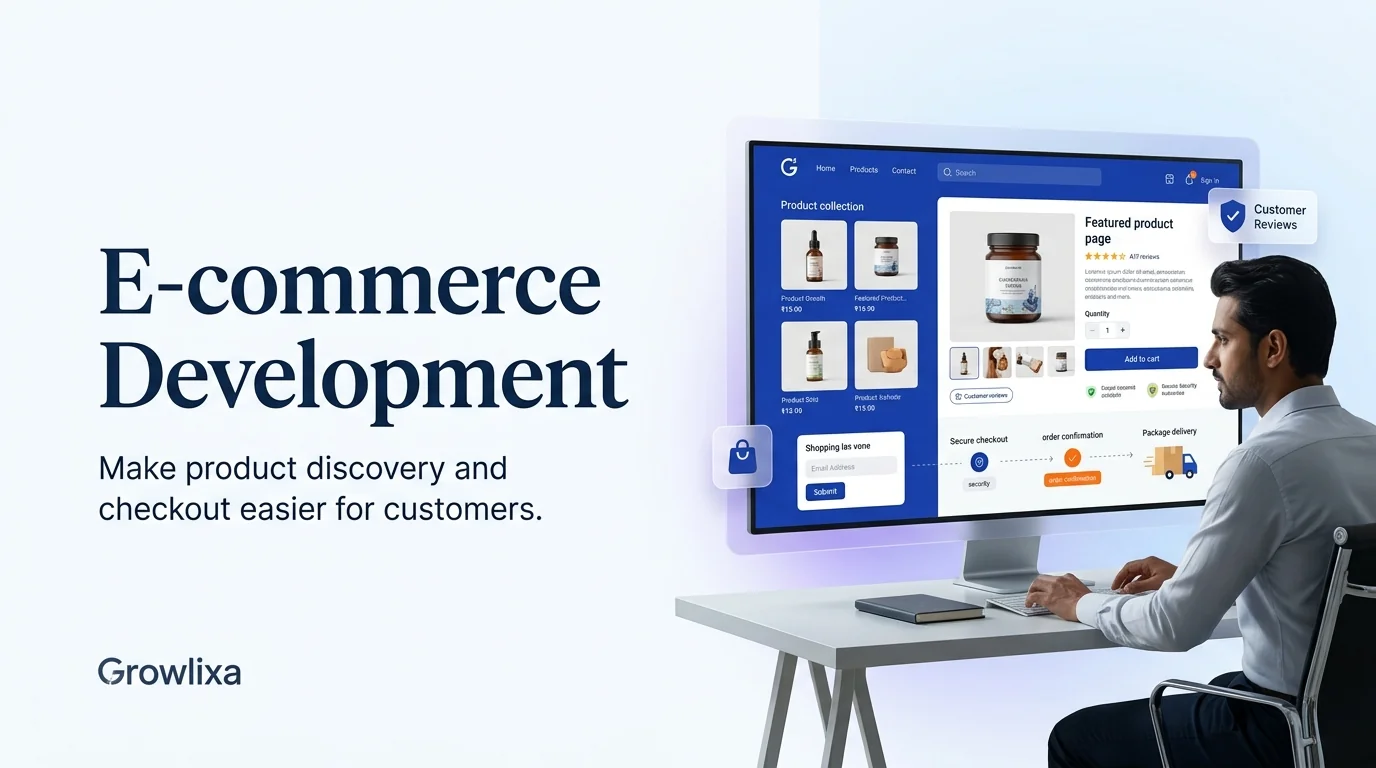
An online store should do more than display products. It should help a customer understand what they are buying, compare options, trust the brand, complete checkout without friction and feel confident enough to return.
Growlixa designs and develops e-commerce experiences for Indian brands that want a stronger digital storefront. We combine store strategy, product architecture, mobile-first design, product-page clarity, checkout thinking, payment and operational integrations, and conversion foundations to create stores built for real customer journeys.
Whether you are launching a D2C brand, moving a catalogue online, improving an existing store or expanding an established e-commerce business, we begin with the same question: what information does your customer need before they are ready to buy?
Primary CTA: Plan Your Online Store →
Supporting line: Shopify · WooCommerce · Product UX · Checkout · Payments · Growth integrations
An e-commerce store is a customer journey—not a product grid
A shopper may arrive from Instagram, Google Search, Meta Ads, a creator recommendation, WhatsApp or a direct visit. They may know exactly what they want, or they may need help deciding.
The store needs to support both journeys:
When information is missing, product pages are weak, mobile experience is poor or checkout is confusing, marketing spend becomes less effective. Growlixa treats e-commerce development as the bridge between product, brand, technology and conversion.
What Growlixa e-commerce development includes
Store discovery and commercial planning
Before choosing a theme or platform, we understand the commercial model. We review product range, customers, pricing, order operations, delivery areas, payments, returns, catalogue complexity and growth goals.
We clarify:
- what customers buy and why;
- whether the store is D2C, B2B, catalogue-led or hybrid;
- product categories, variants and bundles;
- shipping, tax, payment and inventory requirements;
- customer support and return process;
- existing product images, copy and content gaps;
- preferred platform, integrations and editing needs;
- priority conversion actions and measurement.
You receive: store discovery brief, product / category structure and recommended build scope.
Platform and architecture guidance
The right e-commerce platform depends on the business. Shopify can be suitable for many D2C brands seeking fast, managed commerce. WooCommerce can be useful for businesses already using WordPress or needing flexible content-commerce integration. More complex cases may require custom planning.
We recommend a platform based on:
- product and catalogue size;
- operational workflow;
- payment and shipping needs;
- integrations;
- content and SEO requirements;
- editing capability;
- future growth and budget.
We do not recommend a platform because it is fashionable. The store should be manageable after launch.
Product discovery and category experience
Customers should be able to find what they need without working too hard. We design category, collection, search and filter experiences around the way products are actually considered.
This can include:
- category and collection hierarchy;
- product sorting and filtering strategy;
- search experience;
- product recommendations;
- bundles and related product logic;
- collection copy and imagery;
- navigation and mobile browse flow;
- promotional and seasonal collection planning.
Product-page UX and conversion content
A product page often decides whether the customer continues or leaves. It should answer the practical questions that create confidence.
We plan product-page sections around:
- clear product title and value proposition;
- image and video hierarchy;
- product details and specifications;
- variants, sizing, materials or compatibility;
- price and offer clarity;
- delivery, returns and payment information;
- authentic reviews and trust signals where available;
- FAQs and care / usage information;
- related products and bundles;
- add-to-cart and checkout clarity.
We avoid hiding essential information until the final checkout step. Clear information earns trust and can reduce support questions.
Mobile-first store design
Many e-commerce customers browse and purchase from a phone. We design the journey for small screens from the beginning: thumb-friendly controls, readable content, useful product imagery, fast loading and simple checkout actions.
The visual design follows Growlixa’s principle of clarity: clean layouts, strong product focus, accessible contrast, limited distractions and conversion actions that are easy to find.
Checkout, payment and operational integration
The purchase experience must work beyond the product page. Depending on scope and platform, we plan or implement:
- payment gateway integration;
- shipping and delivery settings;
- taxes and invoice requirements;
- order confirmation experience;
- inventory or fulfilment connections;
- customer email / WhatsApp communication;
- return and support routes;
- analytics and conversion events;
- CRM, email or automation integrations.
We test the full purchase flow before launch. A beautiful store with a broken checkout is not finished.
SEO and growth-ready foundations
E-commerce SEO includes product and collection structure, crawlable pages, useful descriptions, internal links, image optimisation and clean technical foundations. We build these basics into the store plan, then link to dedicated SEO services for ongoing organic growth.
The store can also be prepared for Google Ads, Meta Ads, email marketing, product feeds, remarketing and customer-retention workflows.
From customer discovery to a useful business action
Every Growlixa growth workflow is designed around clear customer journeys, useful information and measurable next steps.
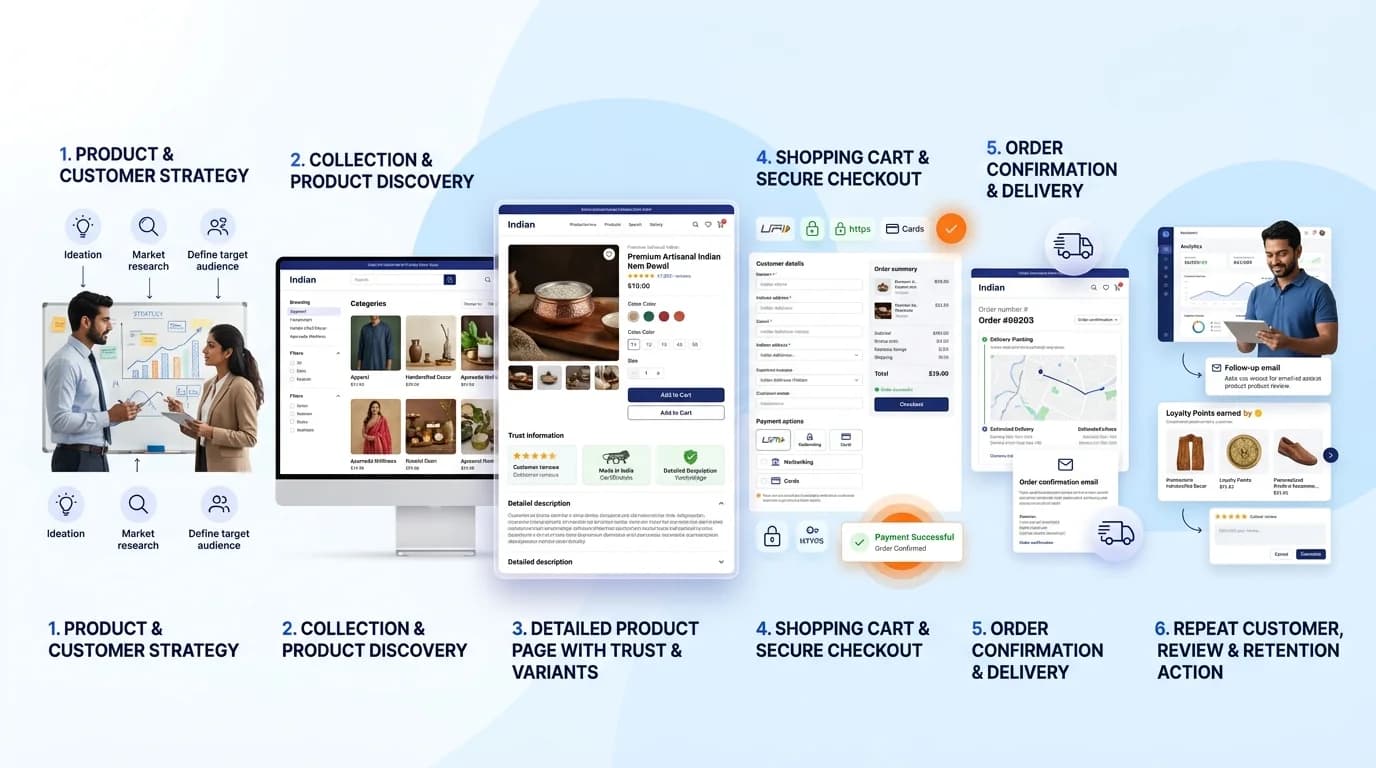
The Growlixa e-commerce development workflow
Step 01 — Understand product, customer and operations
Typical timing: Days 1–5
We learn how customers buy, what products need explanation, how orders are fulfilled and which business systems must connect.
Deliverable: store discovery brief and product architecture plan.
Step 02 — Choose the platform and map the purchase journey
Typical timing: Week 1
We confirm the platform, collection structure, product-page requirements, navigation, payment / shipping needs and conversion actions.
Deliverable: sitemap, customer journey and technical scope.
Step 03 — Design the product and checkout experience
Typical timing: Week 2–3
We create mobile-first UX/UI direction for home, collection, product, cart and checkout-related experiences. Product content and trust elements are planned alongside design.
Deliverable: approved store design / wireframes and content requirements.
Step 04 — Build, integrate and populate
Typical timing: based on catalogue and scope
We develop the store, configure products, collections, payments, shipping, key integrations, tracking and content components.
Deliverable: staging store for review and testing.
Step 05 — Test the whole customer journey and launch
Typical timing: final stage
We test browse, search, product selection, cart, checkout, confirmation, mobile behaviour and core operational actions.
Deliverable: live store, launch checklist and growth-readiness plan.
Who is this service for?
E-commerce Development is useful for:
- D2C product brands;
- fashion, beauty, wellness and lifestyle businesses;
- food, gift and speciality-product brands;
- local retailers expanding online;
- manufacturers selling directly to customers or distributors;
- catalogue-driven B2B businesses;
- existing stores needing a clearer customer experience;
- startups launching an online product range.
It may not be the first step if product information, fulfilment operations, photography, pricing or return policy are not ready. We can identify these gaps during discovery so the build starts on a practical foundation.
Frequently asked questions
Should I use Shopify or WooCommerce?
The right choice depends on your catalogue, operations, existing website, integrations, editing needs and budget. Shopify is often a strong managed-commerce option; WooCommerce can be useful for WordPress-connected stores and flexible content needs. We recommend after discovery.
Can you migrate an existing e-commerce store?
Yes. A migration requires careful planning for products, URLs, SEO value, customer data, redirects, payment settings and testing. We create a migration checklist before changing platforms.
Will the store work on mobile?
Yes. Mobile-first design is part of the build process. We test key pages and the purchase journey on common device sizes before launch.
Can you add payment, shipping and WhatsApp integration?
Yes, within the agreed platform and project scope. We plan the customer journey from payment through confirmation and support, not simply the product catalogue.
Is SEO included in e-commerce development?
We include SEO-ready store foundations: product / collection architecture, URL guidance, metadata structure, internal links, image optimisation and technical considerations. Ongoing e-commerce SEO is a separate growth service.
Can you help increase sales after the store launches?
Yes. The store can connect with SEO, Google Ads, Meta Ads, email marketing, landing-page optimisation, social media and AI customer-support solutions according to the business goal.
Ready to build a store customers can use with confidence?
Growlixa will review your product range, customer journey, operational requirements and growth goals to recommend the right e-commerce build plan.
Primary CTA: Plan Your Online Store → /contact
Microcopy: Product-first UX · Mobile-ready checkout · Growth-ready foundation