Eyebrow: APPROVED BUSINESS KNOWLEDGE, RAG & TRUSTED AI ANSWERS
AI Knowledge Base & RAG Systems That Help AI Answer From Your Business Information
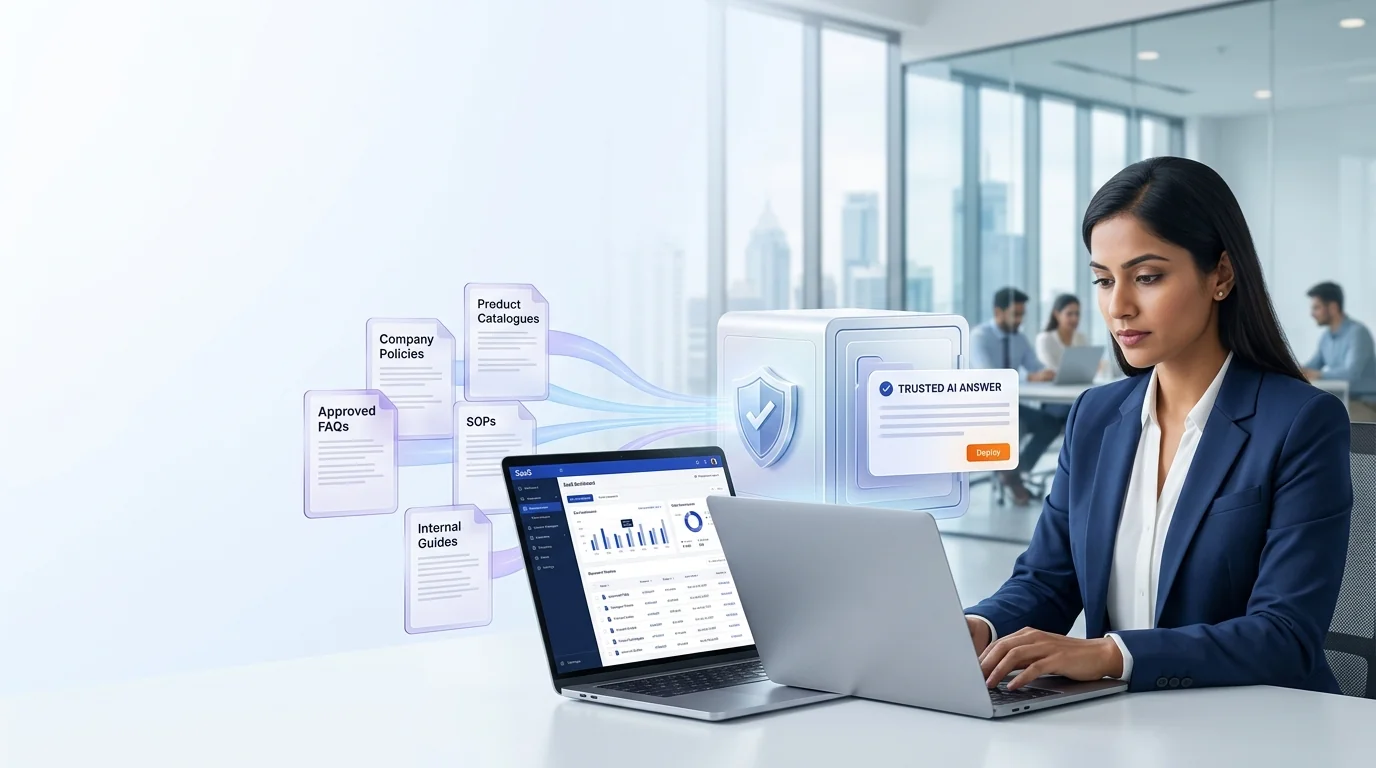
An AI assistant is only useful when it can access the right information, in the right context, with the right boundaries. A general AI model may write fluent answers, but it does not automatically know your latest services, product specifications, policies, SOPs, pricing rules or internal processes.
Growlixa builds AI Knowledge Base and RAG systems that connect approved business information to AI applications. We organise the relevant sources, define access and permissions, improve retrieval quality, add guardrails and create a process for keeping knowledge current over time.
The result is not “AI trained on everything.” It is a controlled system that retrieves relevant approved information before responding, helping teams and customers receive more useful, grounded answers.
Primary CTA: Plan Your AI Knowledge System →
Supporting line: Document intelligence · Approved sources · RAG retrieval · Permissions · Guardrails · Ongoing updates
Generic AI is impressive until it answers a business-specific question incorrectly
A customer may ask about an exact product specification. An employee may need the latest policy. A sales person may need to know which service package fits a client requirement. A support agent may need the correct process for a return, booking or escalation.
If the answer comes from memory, scattered documents or a general AI model with no approved source, mistakes become likely.
A stronger approach is:
This approach is commonly called Retrieval-Augmented Generation, or RAG.
What is RAG?
RAG stands for Retrieval-Augmented Generation. It is an approach that helps an AI system retrieve relevant information from approved sources before it generates a response.
Instead of relying only on a model’s general knowledge, the system can use business-specific content such as:
- FAQ documents;
- product catalogues;
- service details;
- SOPs and process documents;
- policy documents;
- support articles;
- internal manuals;
- approved website content;
- project documentation;
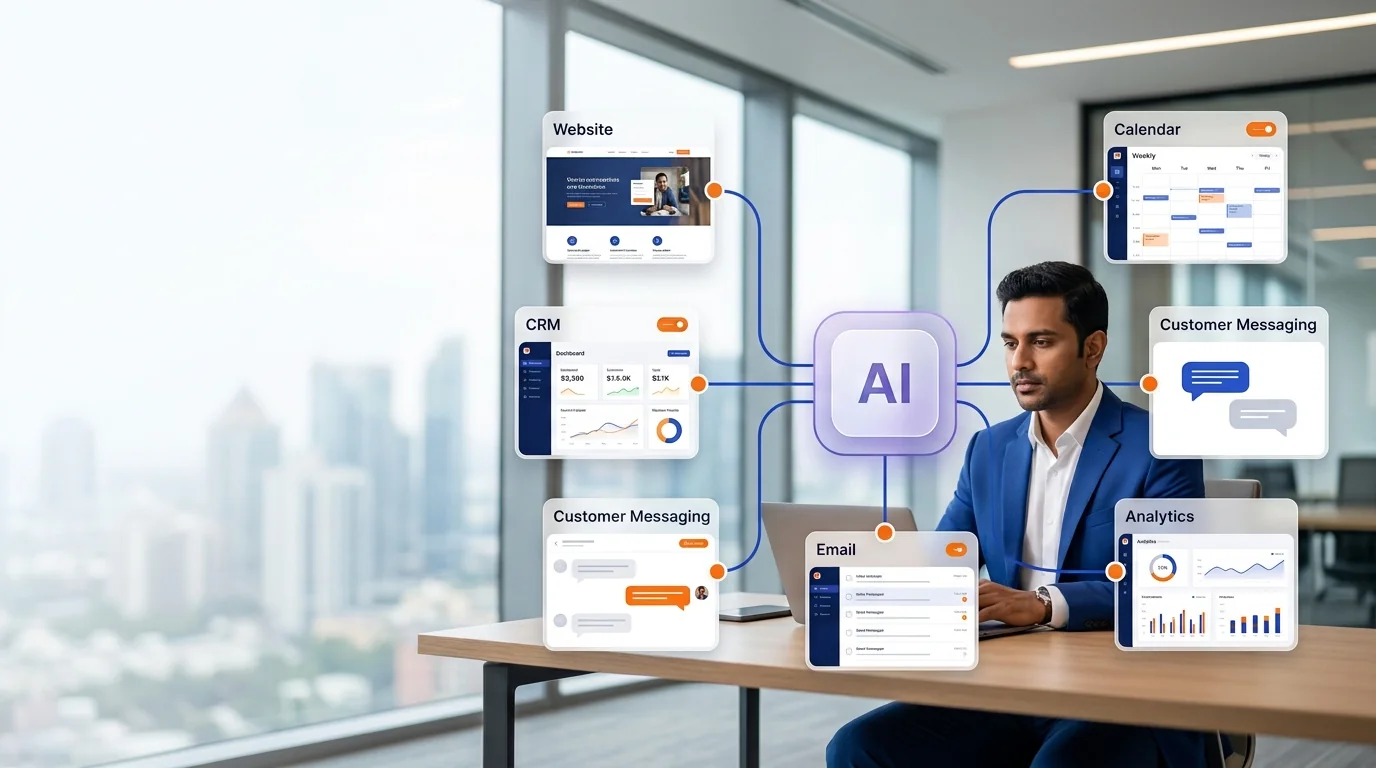
- selected databases or connected systems.
A RAG system does not eliminate all risk of incorrect output. It improves the chance of a useful, relevant response by grounding the answer in the information the business has approved. Testing, source quality, access controls, confidence thresholds and human escalation remain essential.
What Growlixa AI Knowledge Base & RAG services include
Knowledge-source discovery
We begin by identifying what information should be available to the AI and what should not.
We review:
- documents, guides and FAQs;
- website content;
- product / service information;
- policies and SOPs;
- customer-support content;
- internal team knowledge;
- document owners and update process;
- sensitive data and access restrictions;
- duplicate, outdated or contradictory material;
- business questions the system should answer.
You receive: knowledge-source inventory, information-gap review and access-scope recommendation.
Content cleaning, organisation and readiness
A RAG system is only as reliable as its source material. We help prepare the knowledge so the system can retrieve useful context.
This may include:
- identifying outdated documents;
- removing duplicate or conflicting information;
- organising categories and source ownership;
- separating public and internal knowledge;
- defining version-control and update process;
- creating missing FAQs or support content;
- establishing document naming and metadata standards;
- defining which content needs human approval before inclusion.
The aim is not to upload every file ever created. It is to build a useful, governed knowledge layer.
Retrieval architecture and relevance design
A RAG system needs to find the most relevant information for a particular question. We design how knowledge is prepared, indexed, searched and returned to the AI assistant.
The technical approach may consider:
- document chunking and contextual grouping;
- metadata and categories;
- semantic and keyword retrieval;
- relevance ranking;
- source filtering;
- language requirements;
- access permissions;
- source citation or traceability where appropriate;
- response length and model choice;
- latency, cost and update frequency.
The architecture is selected based on the business use case, data size, sensitivity, language, integration requirements and maintenance capability.
Access control and permission boundaries
Not all knowledge should be available to all users. We design the rules that keep information appropriate to the audience.
Examples include:
- public website assistant uses only public service information;
- employee assistant can access approved internal SOPs;
- sales assistant can access product and customer-facing documentation;
- restricted documents require role-based access;
- sensitive financial, medical, legal or customer data requires additional controls or exclusion.
A knowledge assistant should not expose confidential information simply because it exists in a folder.
Guardrails, confidence and human review
A RAG system should know when the source information is not sufficient. We plan:
- fallback wording when no approved answer is found;
- confidence or relevance thresholds;
- source traceability where appropriate;
- safe response boundaries;
- human escalation route;
- restricted-topic rules;
- evaluation tests for incorrect or adversarial questions;
- monitoring of unanswered or weak queries.
The goal is to help the system abstain or escalate responsibly rather than invent an answer.
AI assistant and channel deployment
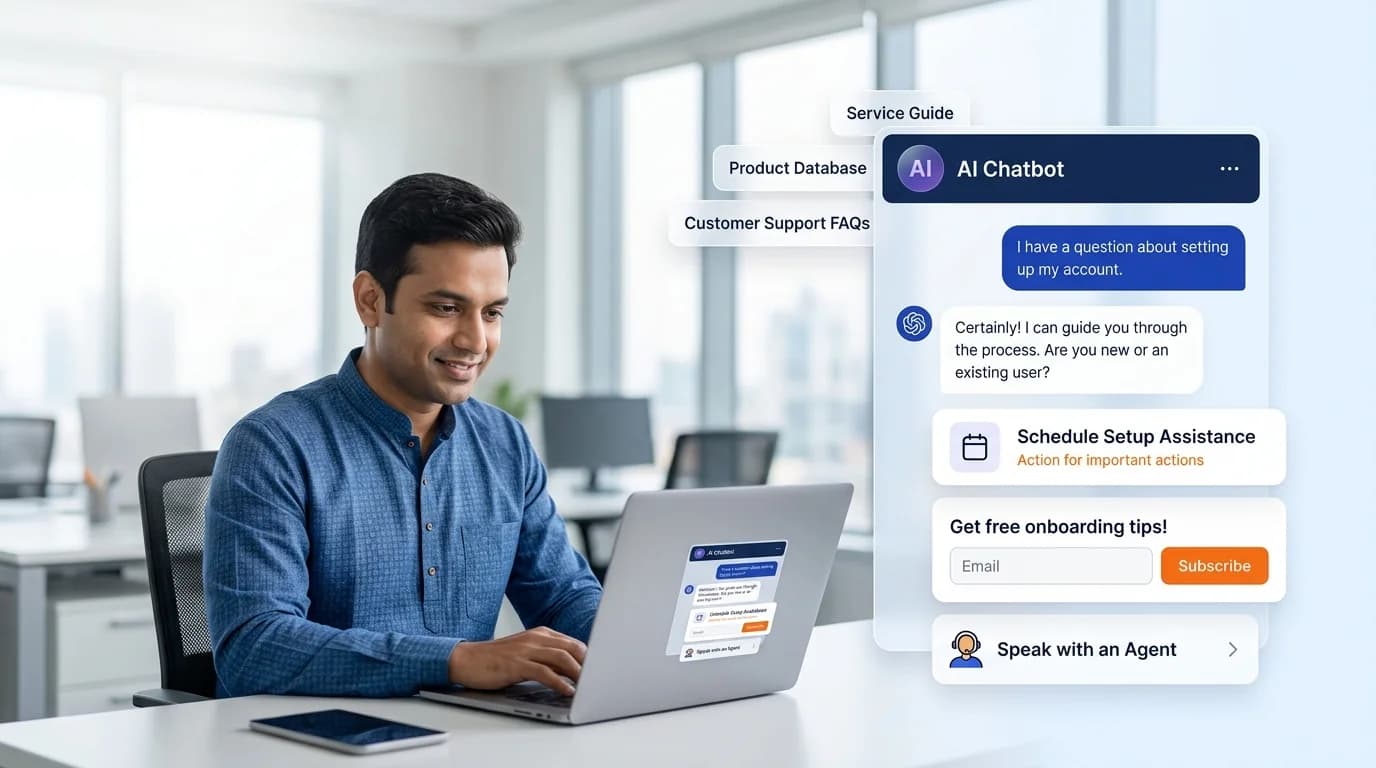
The knowledge system can support different applications, such as:
- website chatbot;
- internal employee assistant;
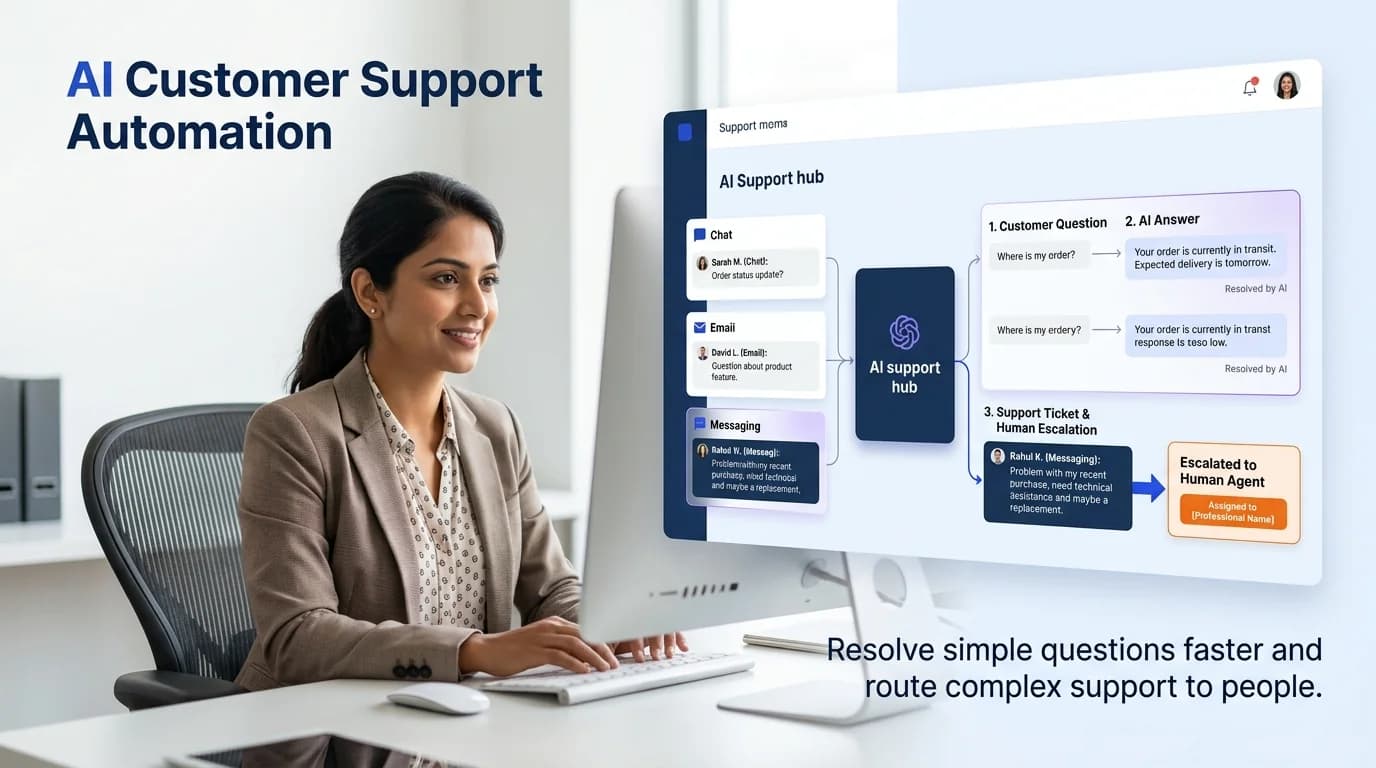
- customer-support assistant;
- WhatsApp assistant;
- sales enablement tool;
- document search interface;
- AI calling assistant knowledge layer;
- support or helpdesk integration.
The deployment channel is chosen after defining the knowledge, audience and business action required.
Evaluation, updates and maintenance
Knowledge changes. Services change, policies change, products change and customers ask new questions.
We create a maintenance approach that can include:
- approved document update process;
- test question set;
- evaluation of retrieval and response quality;
- monitoring of weak or unanswered questions;
- feedback from users and team;
- knowledge-owner assignment;
- version review;
- prompt and guardrail updates;
- periodic access review.
From customer input to a useful business action
Every Growlixa AI workflow is designed around clear actions, reliable data movement and human escalation where needed.
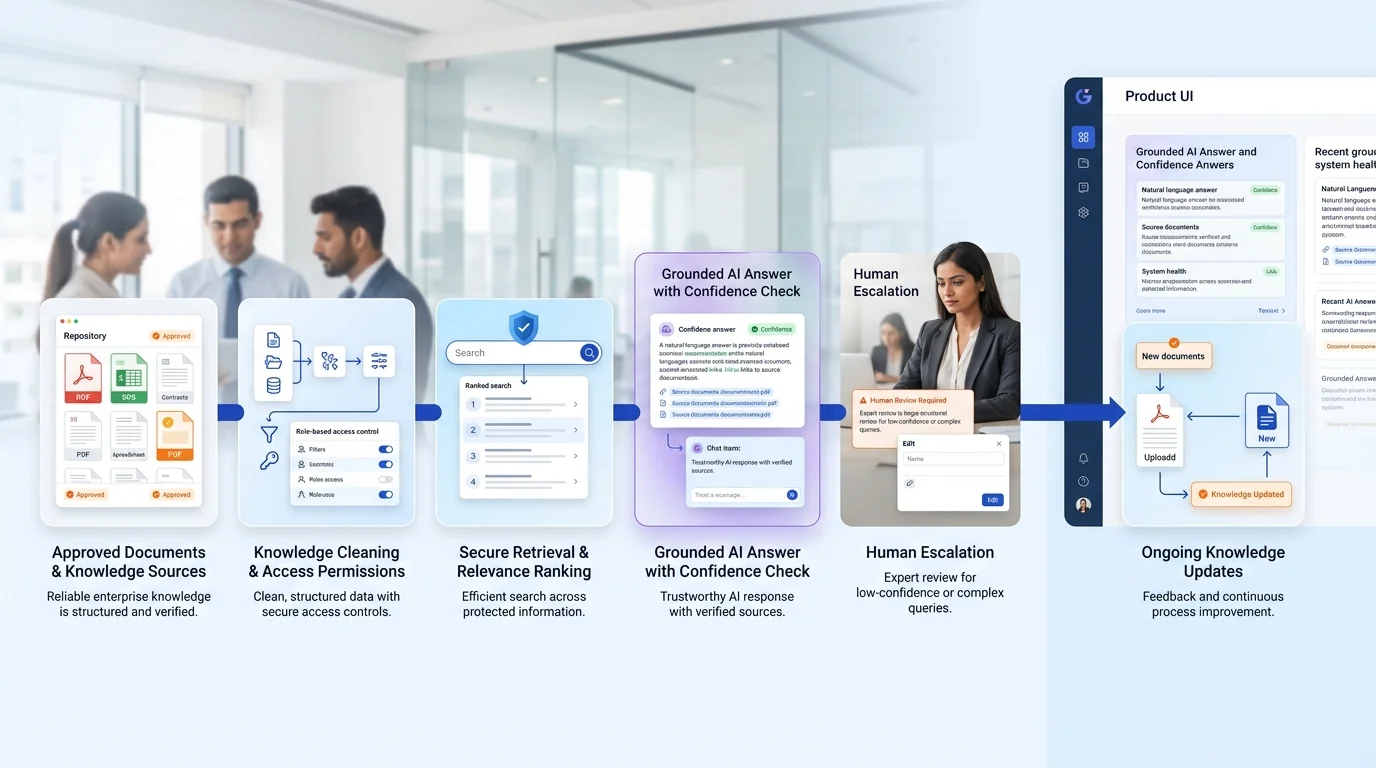
The Growlixa RAG delivery workflow
Step 01 — Define the audience and the questions worth answering
Typical timing: Days 1–4
We decide whether the system serves customers, employees, sales teams, support teams or another approved audience. We identify the important questions and actions.
Deliverable: audience definition, knowledge-use-case brief and priority question map.
Step 02 — Inventory and prepare approved sources
Typical timing: Week 1–2
We review documents, content, ownership, access and quality. We identify what should enter the knowledge system and what needs updating first.
Deliverable: source inventory, readiness findings and knowledge-preparation plan.
Step 03 — Design retrieval, access and guardrails
Typical timing: based on scope
We define retrieval logic, source filtering, permissions, confidence thresholds, fallback and human handoff.
Deliverable: RAG architecture and safety / access design.
Step 04 — Build and test with real questions
Typical timing: before launch
We test the system against real customer or employee questions, varied wording, missing information, irrelevant questions and sensitive requests.
Deliverable: evaluation set, test results and launch checklist.
Step 05 — Launch, monitor and improve knowledge quality
Typical timing: ongoing
We review response usefulness, source gaps, changes in business information and user feedback.
Deliverable: knowledge-quality review and maintenance roadmap.
RAG use cases by business type
| Business type | Useful knowledge-system role |
|---|---|
| Customer support team | Product, policy and troubleshooting assistant |
| B2B manufacturer | Product specifications, certifications and capability knowledge |
| Sales team | Service, product and customer-facing proposal support |
| Clinic / healthcare | Approved non-clinical service, booking and information assistance with strict escalation |
| Hotel / hospitality | Facility, booking, policy and guest information assistant |
| Education | Course, admission, policy and student-support knowledge assistant |
| Professional services | Process, service and approved resource assistant |
| Internal operations | SOP, policy, onboarding and project-document search |
What an AI knowledge system should not do
A controlled knowledge system should not:
- use unapproved or outdated documents as authoritative source;
- expose confidential files to users without permission;
- make medical, legal, financial or high-impact decisions without qualified human review;
- invent source citations;
- claim certainty when no relevant source is found;
- substitute for formal policy, contract or regulated advice;
- remain unchanged while business information evolves.
How success is measured
Useful metrics may include:
- relevant questions answered from approved knowledge;
- retrieval relevance during evaluation;
- unanswered-question rate;
- human escalation rate;
- time saved locating internal information;
- customer-support response consistency;
- knowledge-source freshness;
- user feedback;
- reduction in repeated internal questions;
- quality of source coverage for priority topics.
We do not promise a fixed accuracy percentage before assessing the source quality, use case, language needs and evaluation standard.
Related Growlixa AI solutions
AI Knowledge Base & RAG Systems connect with:
- AI Chatbot Development;
- AI Customer Support Automation;
- WhatsApp AI Automation;
- AI Calling Assistants;
- AI Integration & API Development;
- AI Document & Data Automation;
- AI Monitoring, Training & Optimisation;
- AI Workflow Automation;
- Content Marketing & Copywriting;
- Website Design & Development.
Frequently asked questions
What is a RAG system?
RAG stands for Retrieval-Augmented Generation. It helps an AI system retrieve relevant approved information from your business sources before generating a response.
How is RAG different from training an AI model?
A RAG system retrieves current information from approved sources at the time of the question. It can be updated by changing the knowledge source. Model training or fine-tuning is a different approach and may be appropriate only for specific use cases.
Can the system use our PDFs, SOPs and FAQs?
Yes, after reviewing the documents for quality, access permissions, duplication and update ownership. The goal is to use approved, useful sources rather than blindly ingesting every file.
Can customers see internal documents?
No. Access rules should separate public and internal knowledge. A customer-facing assistant should only access the content explicitly approved for that audience.
Does RAG guarantee correct answers?
No. RAG can improve grounding by retrieving relevant business information, but quality still depends on source accuracy, retrieval design, test coverage, guardrails and human escalation for uncertain cases.
Can RAG support Hindi and English?
Language requirements can be planned and tested against your actual documents and customer questions. Quality should be evaluated for the languages your users actually use.
How do we keep the knowledge base updated?
We define source ownership, document update process, version review and monitoring of unanswered questions. A knowledge system needs maintenance as the business changes.
Can Growlixa build a chatbot using our knowledge base?
Yes. The RAG knowledge system can provide the approved information layer for a website chatbot, WhatsApp assistant, internal support tool or AI calling workflow.
Ready to give your AI assistant approved business knowledge?
Growlixa will review the information your business already has, the questions customers or employees ask and the access rules that matter. Then we will design a knowledge system that helps AI provide useful answers without losing control of your information.
Primary CTA: Plan Your AI Knowledge System → /contact
Microcopy: Approved sources · Controlled access · Better grounded answers