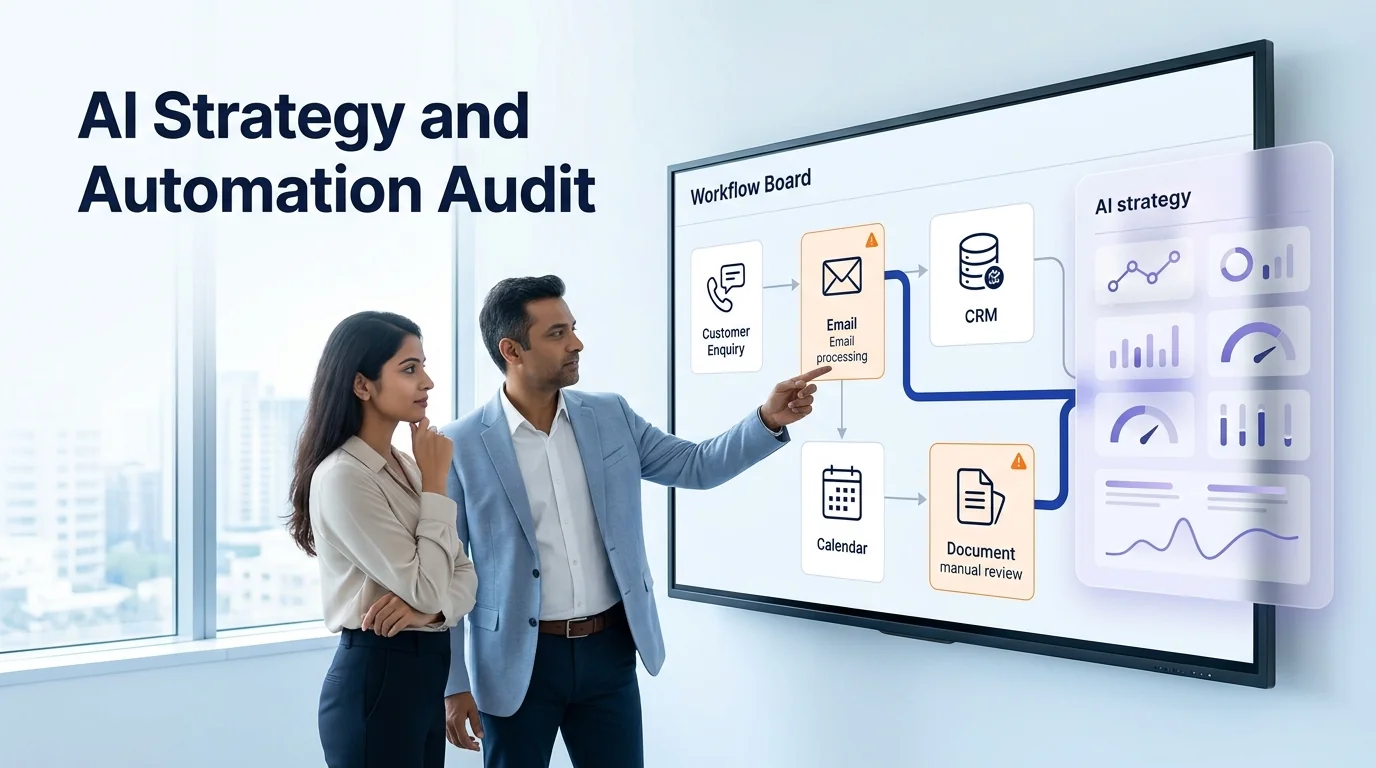
Eyebrow: AI STRATEGY, WORKFLOW DISCOVERY & IMPLEMENTATION ROADMAP
Find the AI and Automation Opportunities That Are Actually Worth Building.
Most businesses do not need “more AI.” They need fewer manual bottlenecks, faster customer response, clearer information and systems that do useful work without creating new problems for the team.
Growlixa’s AI Strategy & Automation Audit helps businesses identify where AI, workflow automation, better integrations or simple rules-based processes can create practical value. We examine the work your team repeats, the places where customers wait, the data that moves between tools and the decisions that consume unnecessary time. Then we prioritise what should be improved first.
The result is not a vague innovation presentation. It is a practical roadmap: which workflow to pilot, what systems need to connect, what data is required, where a human must remain involved, how success will be measured and what implementation should look like.
Primary CTA: Request an AI Automation Audit →
Supporting line: Workflow discovery · ROI prioritisation · Integration review · Human handoff · Implementation roadmap
AI should solve a business bottleneck, not become another subscription
Many teams start with an AI tool because it looks impressive in a demo. A few weeks later, the tool sits outside the real workflow. Staff copy information between systems, customer enquiries still wait for a response and no one knows whether the automation is saving time or creating more work.
The problem is not usually the model. The problem is starting with technology instead of the business process.
A useful AI system begins with a clear question:
What is happening repeatedly today?
Where does work slow down?
What information is missing or copied manually?
Which customer requests are simple enough to handle consistently?
Which decisions need a human review?
What would improve if this workflow ran reliably?
An AI Strategy & Automation Audit answers these questions before a business spends money on the wrong platform, chatbot, voice agent or automation tool.
What is an AI Strategy & Automation Audit?
An AI Strategy & Automation Audit is a structured review of your current processes, systems, data and customer journey. It identifies which opportunities are suitable for traditional automation, AI-assisted workflow or a more advanced AI agent.
The audit does not assume AI is the answer to every problem. In some cases, a clean CRM process, a better form, a shared knowledge document or a rules-based automation is faster, cheaper and more reliable than an AI model.
The audit can examine workflows across:
- sales and lead response;
- customer support;
- appointment booking;
- WhatsApp and email follow-up;
- CRM updates;
- reporting and dashboards;
- internal knowledge access;
- document, invoice and form processing;
- onboarding and approvals;
- content operations;
- e-commerce customer journeys;
- project handoffs and team notifications.
The final recommendation is based on business value, feasibility, data readiness, customer impact, implementation effort, risk and the ability to measure results.
What Growlixa reviews during an AI Automation Audit
1. Business goals and customer journey
We begin with the outcome the business wants to improve. Different businesses need different systems.
A clinic may need faster appointment response. A hotel may need guest enquiry automation. A manufacturer may need faster B2B lead routing. An e-commerce brand may need order-status support and cart follow-up. A professional service firm may need better consultation intake and CRM discipline.
We clarify:
- priority business outcomes;
- customer types and common requests;
- current sales or support journey;
- service-level expectations;
- team capacity and response time;
- existing tools and process ownership;
- potential risks or sensitive scenarios.
You receive: a business-outcome brief and customer-journey map.
2. Workflow and bottleneck mapping
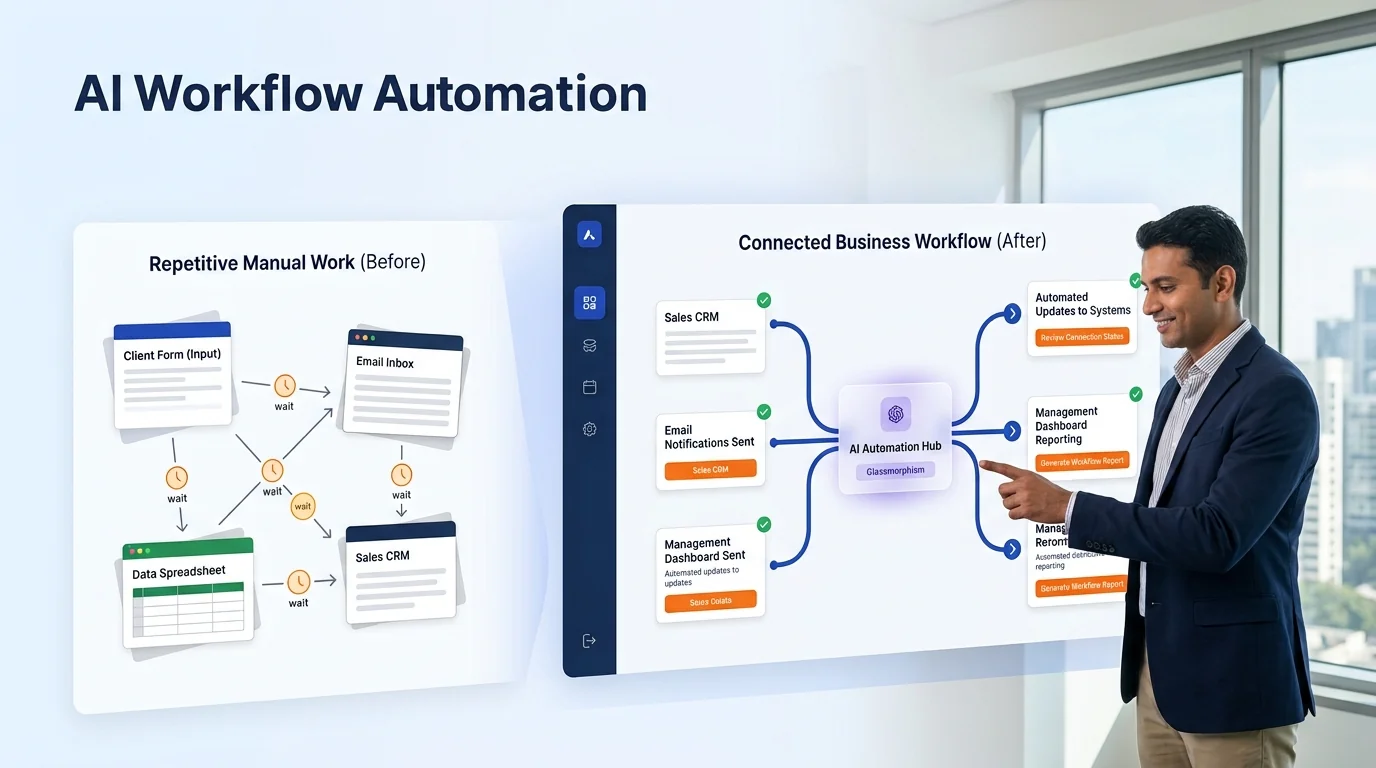
We map what happens from beginning to end. This includes the visible customer journey and the internal work that happens behind it.
For a lead journey, this may be:
We identify delays, repeated steps, missing information, duplicate data entry, unclear ownership, bottlenecks and points where customers are lost.
You receive: current-state workflow map with friction points and automation candidates.
3. Opportunity scoring and ROI prioritisation
Not every manual task should be automated. We score opportunities based on practical criteria:
- frequency: how often does the process occur?
- effort: how much staff time does it consume?
- consistency: are the rules clear enough to automate safely?
- business value: does improvement affect revenue, speed, service or risk?
- data readiness: is the information available and usable?
- system access: can relevant tools connect?
- customer impact: will it improve or damage the experience?
- human review requirement: where must a person approve or intervene?
This prevents a common mistake: investing in an advanced AI system for a low-value process while a simple high-impact workflow remains broken.
You receive: prioritised automation opportunity matrix with quick wins, phased projects and items that should remain manual.
4. Tool, data and integration review
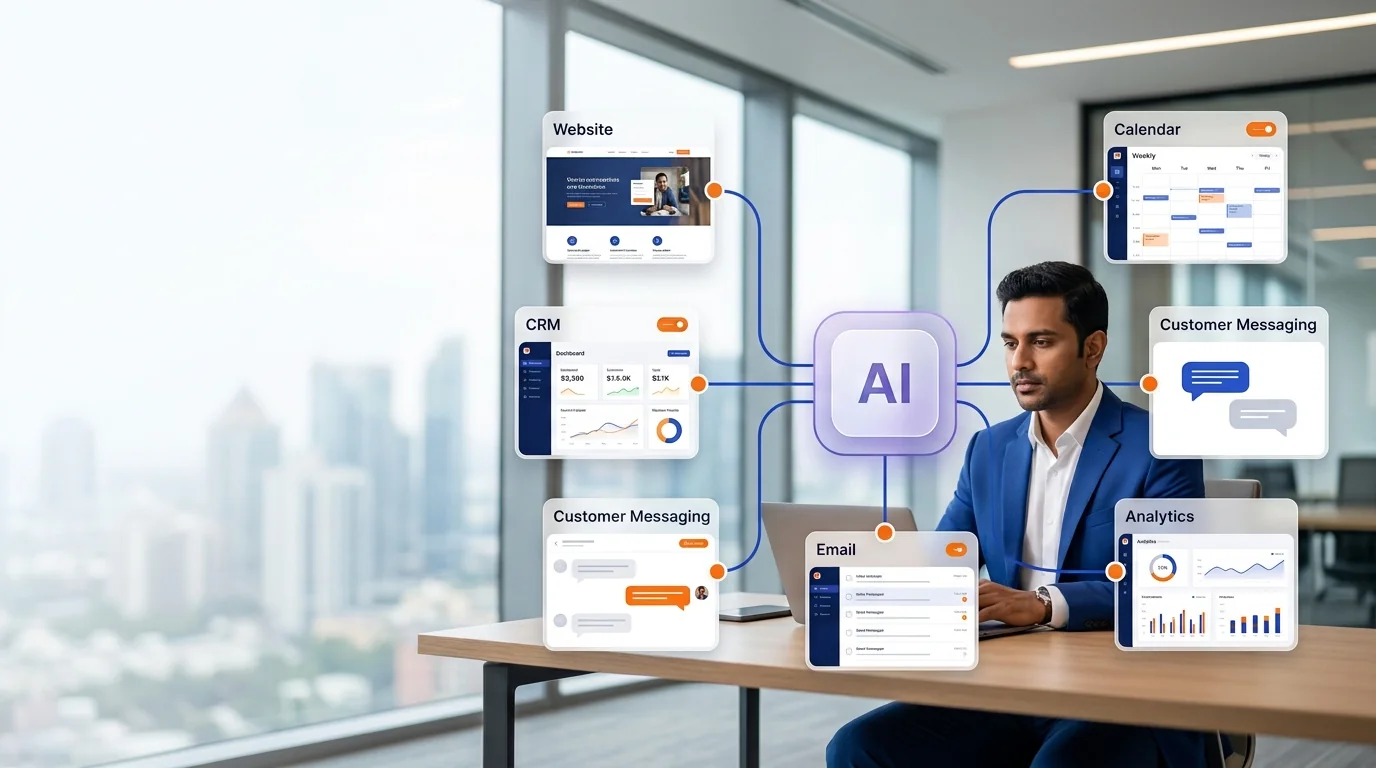
AI systems only work well when they fit the existing environment. We assess your current stack and identify what needs to connect.
Depending on the business, this may include:
- website forms and landing pages;
- Google Workspace or Microsoft 365;
- CRM platforms;
- WhatsApp Business;
- email platforms;
- calendars and appointment tools;
- spreadsheets and databases;
- helpdesk or ticketing systems;
- e-commerce platform;
- ERP or inventory systems;
- accounting, document or reporting tools;
- APIs and webhooks.
We also review the quality of business data. A chatbot cannot give reliable answers if the FAQ, product list or policy documents are outdated. A CRM workflow cannot score leads correctly if every sales person uses different fields.
You receive: integration map, data-readiness findings and recommended architecture direction.
5. Human handoff, safety and privacy planning
A credible AI plan does not remove people from every important decision. It decides where people are most valuable.
We identify:
- customer conversations that need human escalation;
- low-confidence outputs requiring review;
- sensitive data that should not enter a public AI tool;
- approval steps before important messages or actions are sent;
- access permissions for internal knowledge;
- audit and documentation requirements;
- failure routes when a system or API is unavailable;
- responsible ownership after launch.
For example, an AI receptionist may answer opening-hours questions and book an appointment, but an urgent complaint, medical query, legal issue or payment dispute should be routed to a qualified person.
You receive: human-in-the-loop plan, escalation rules and initial data / privacy checklist.
6. Pilot recommendation and implementation roadmap
The audit ends with a practical starting point. We do not recommend a large multi-agent system before one workflow has proven useful.
A typical roadmap may look like:
Phase 1
Improve lead capture and CRM routing

Phase 2
Add WhatsApp enquiry qualification and appointment follow-up

Phase 3
Build AI knowledge assistant for common support questions

Phase 4
Expand into reporting, document processing or additional channels
Every recommendation has a business reason, required inputs, likely implementation dependencies and success measure.
You receive: 90-day AI automation roadmap, suggested pilot scope and implementation plan.
From customer input to a useful business action
Every Growlixa AI workflow is designed around clear actions, reliable data movement and human escalation where needed.
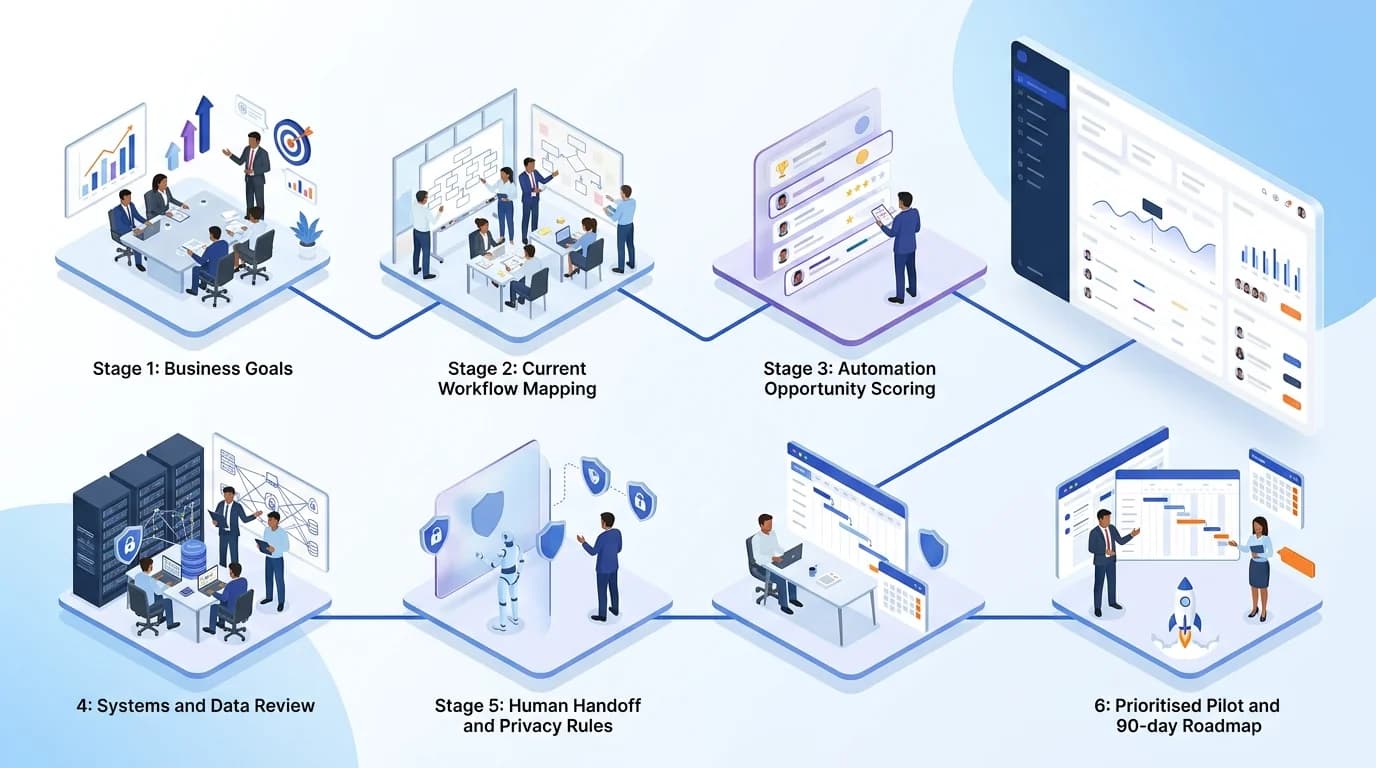
The Growlixa AI Automation Audit workflow
Step 01 — Discovery session and business context
Typical timing: Days 1–3
We meet with the people who understand the work: founders, sales leaders, operations teams, support teams or technical contacts. We establish the business priorities, customer journey and current system landscape.
Deliverable: discovery brief, stakeholder map and desired outcomes.
Step 02 — Current workflow mapping
Typical timing: Days 2–5
We map the real process, not the ideal version. We identify where work waits, repeats, breaks or depends on one person’s memory.
Deliverable: current-state workflow diagram with friction and handoff points.
Step 03 — AI and automation opportunity scoring
Typical timing: Days 4–7
We score candidate workflows by value, feasibility, data readiness, risk and customer impact. We distinguish between rules-based automation, AI-assisted tasks and agentic systems.
Deliverable: prioritised opportunity matrix and quick-win recommendation.
Step 04 — Integration, data and risk review
Typical timing: Week 2
We identify the systems, permissions, data sources, APIs, knowledge documents and human review steps required for a safe implementation.
Deliverable: integration map, data-readiness review and guardrail checklist.
Step 05 — Pilot scope and success metrics
Typical timing: Week 2
We define the first workflow in enough detail to build: triggers, actions, exceptions, owners, acceptance criteria and measures.
Deliverable: pilot scope, implementation backlog and measurement plan.
Step 06 — 90-day roadmap and working session
Typical timing: end of audit
We present the roadmap, explain the trade-offs and help the team decide what should be built now, later or not at all.
Deliverable: 90-day AI roadmap, decision log and next-step proposal.
What an audit can recommend
The audit may recommend one or more of these Growlixa AI solutions:
| Business need | Possible next solution |
|---|---|
| Website visitors wait for answers | AI Chatbot Development |
| WhatsApp enquiries are missed | WhatsApp AI Automation |
| Calls go unanswered | AI Calling Assistant or AI Receptionist |
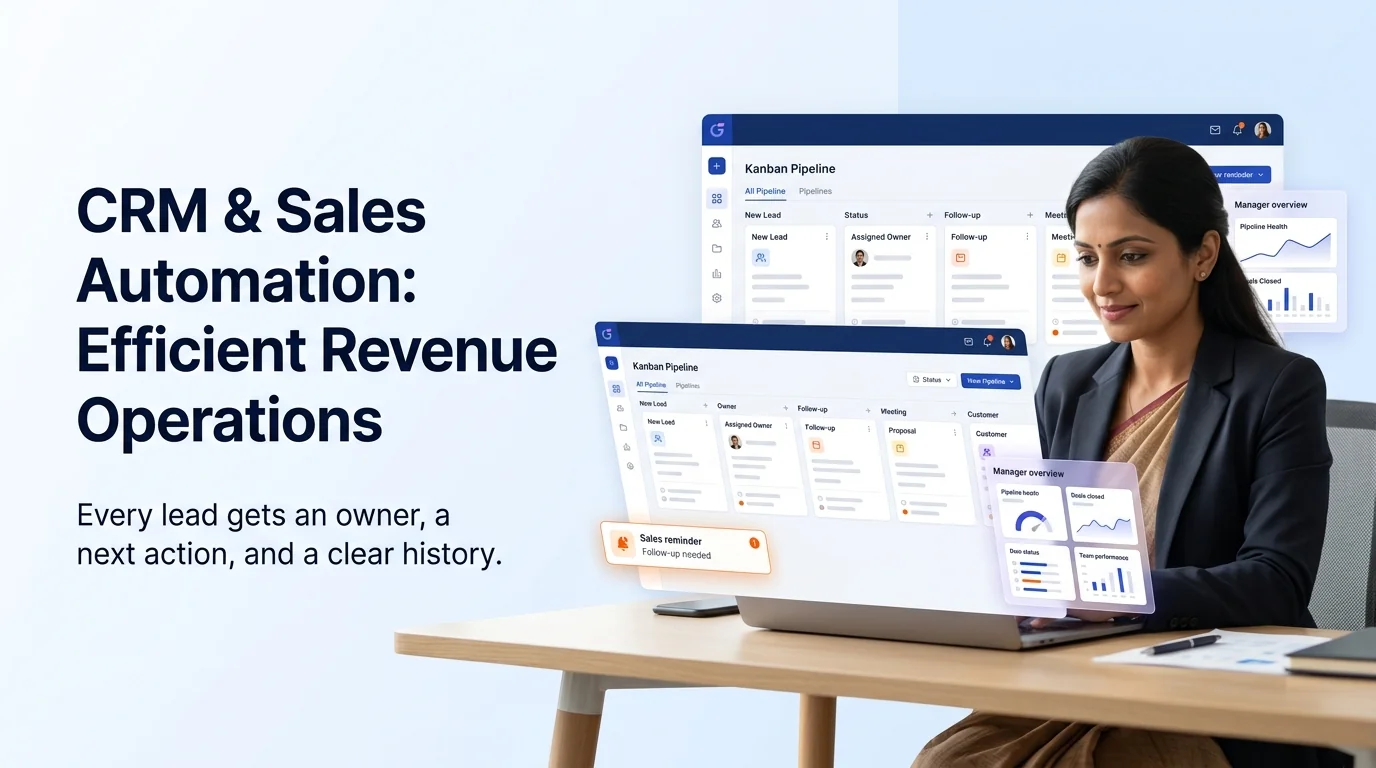
| Sales team follows up inconsistently | AI Lead Qualification & CRM Automation |
| Staff repeatedly search for internal answers | AI Knowledge Base & RAG System |
| Data is copied from documents manually | AI Document & Data Automation |
| Teams use spreadsheets and disconnected tools | AI Workflow Automation |
| Leaders lack clear visibility | AI Reporting & Business Intelligence |
| Existing product needs AI capability | Custom AI Web App & MVP Development |
What this service is for
An AI Strategy & Automation Audit is suitable for businesses that have repeated manual work, growing enquiry volume or disconnected systems, including:
- clinics, healthcare and appointment-led businesses;
- hotels, restaurants and hospitality businesses;
- manufacturers, exporters and B2B suppliers;
- real-estate and property businesses;
- e-commerce and D2C brands;
- education and coaching institutes;
- professional services;
- logistics and operational businesses;
- SaaS, IT and technology companies;
- startups preparing to build an AI-enabled product.
It is especially valuable for teams that feel busy but cannot clearly see where time is being lost.
When an AI audit is not the first step
We will be honest if AI is not the priority yet.
An audit may recommend postponing automation when:
- the process changes every week;
- no owner can explain the current workflow;
- business data is missing or unreliable;
- the website, CRM or core business system is not functioning properly;
- a human decision is legally, ethically or commercially essential;
- the cost of building exceeds the likely value;
- a simple process fix is better than AI.
This is a strength, not a limitation. The right solution is the one that survives real use, real data and real customer behaviour.
How success is measured
The audit itself is successful when the business has a clear decision framework and implementation plan. The later automation project may be measured using:
- reduced response time;
- fewer manual steps;
- faster lead assignment;
- higher follow-up completion;
- fewer missed enquiries;
- improved support resolution;
- reduced document-processing time;
- higher appointment booking rate;
- better CRM data completeness;
- hours reclaimed for higher-value work;
- fewer workflow errors;
- quality and escalation rate of AI outputs.
We agree on the relevant measurement before the pilot launches. We do not promise a generic saving percentage or ROI before the workflow, team and data are understood.
Related Growlixa services
After the audit, businesses commonly move into:
- AI Workflow Automation;
- AI Chatbot Development;
- WhatsApp AI Automation;
- AI Calling Assistants;
- CRM & Sales Automation;
- AI Knowledge Base & RAG Systems;
- AI Document & Data Automation;
- AI Reporting & Business Intelligence;
- Website Design & Development;
- Landing Pages & Conversion Optimisation.
Frequently asked questions
What happens during an AI Automation Audit?
We review your business goals, current workflow, tools, data, customer journey and manual bottlenecks. We then score the opportunities, identify the safest high-value pilot and provide a practical roadmap for implementation.
Do I need technical knowledge to take part?
No. The most valuable input often comes from the people doing the work every day. Growlixa handles the technical evaluation and explains recommendations in clear business language.
Will you recommend AI for every process?
No. Some workflows are better solved with a clearer process, a simple rule-based automation or a better CRM setup. We recommend AI only when it adds meaningful value.
How long does the audit take?
The timing depends on the number of teams, systems and workflows involved. A focused audit can be completed quickly; larger multi-system reviews take longer. We set the scope after understanding your business.
Can you work with the tools we already use?
Yes. The audit reviews your existing website, CRM, email, WhatsApp, calendar, spreadsheets, documents and operational systems before recommending any architecture.
Is business data safe during the audit?
We only request the information needed for the review. Sensitive data should be minimised, access should be permissioned and implementation recommendations should include appropriate privacy, access-control and human-review considerations.
What do we receive at the end?
You receive a workflow map, prioritised opportunity matrix, integration and data-readiness findings, pilot recommendation, success metrics and 90-day implementation roadmap.
Can Growlixa build the recommended systems afterward?
Yes. Growlixa can implement the next phase through specialist AI solution services such as AI chatbots, AI calling, WhatsApp automation, RAG knowledge systems, workflow automation and CRM automation.
Ready to identify the automation work that matters most?
Start with the business bottleneck—not a tool demo. Growlixa will review the work your team repeats, the enquiries your customers send and the systems your business already uses, then recommend the most practical next AI step.
Primary CTA: Request an AI Automation Audit → /contact
Microcopy: Practical roadmap · Human review where needed · No unnecessary AI build